
Home/Vedic Astrology/Planetary Transits
Gochara · planets in motion
Planetary transits: when the sky touches your chart
Your birth chart is a snapshot of the sky at the moment you were born. Transits are the living sky, always moving forward. When a moving planet touches a point in your chart, a new period begins — bringing challenges, gifts, or both.
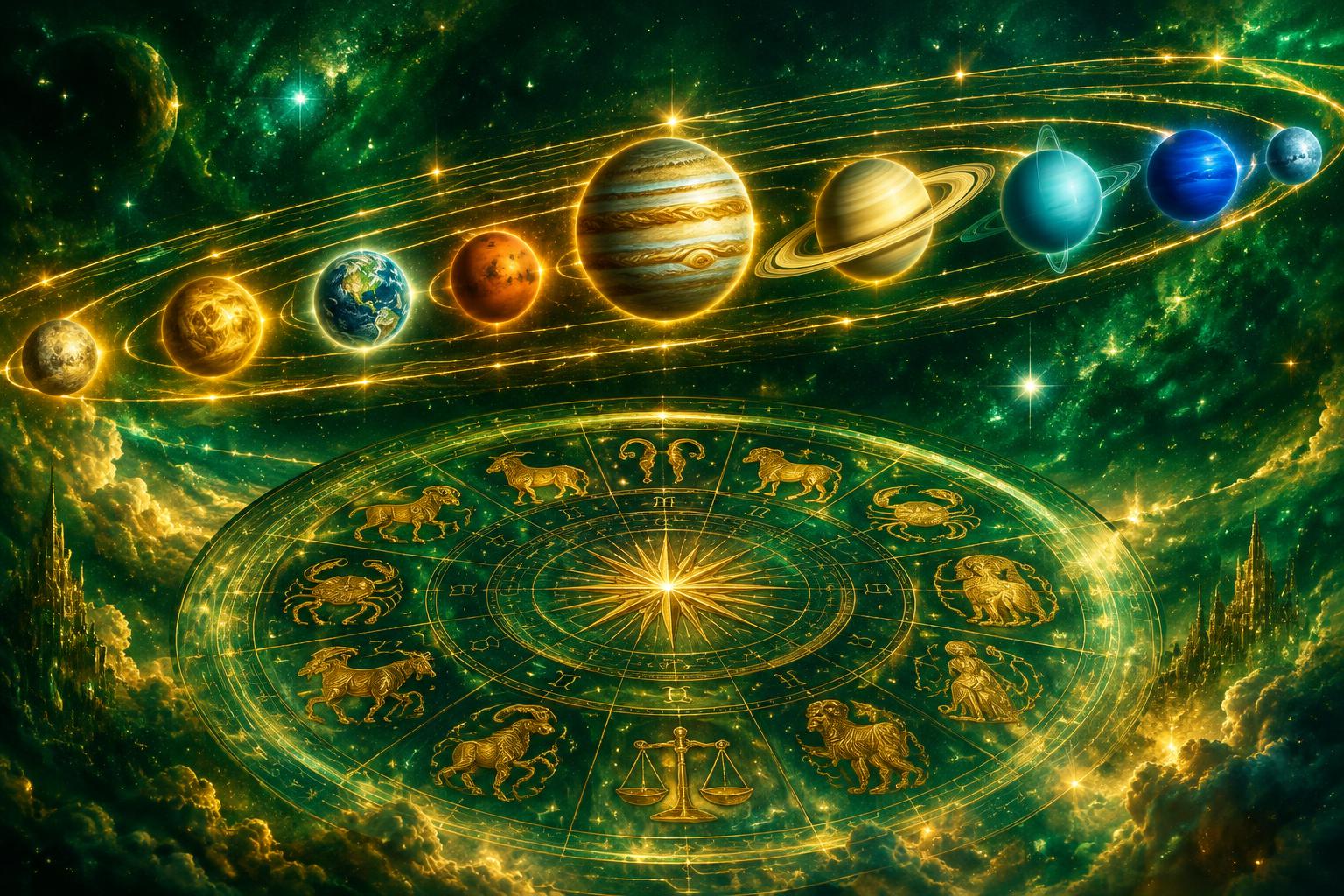
Clear understanding, without fear
Your birth chart reveals what is possible. Transits reveal when.
A planetary transit — gochara in Sanskrit — is a planet’s passage from one sign to another. A planet never stops moving. Each travels at its own pace through the twelve signs, continually changing the sky above us.
Your birth chart always stays the same. It is your cosmic imprint. But when a moving planet approaches a planet or house in your chart, that area of life is stirred into activity. It may bring an opportunity, a lesson, a delay, or a breakthrough — depending on the planet and what it touches.
This is why an astrologer follows transits so closely. The chart reveals what has been planted within you. Transits reveal the season in which that seed begins to sprout.
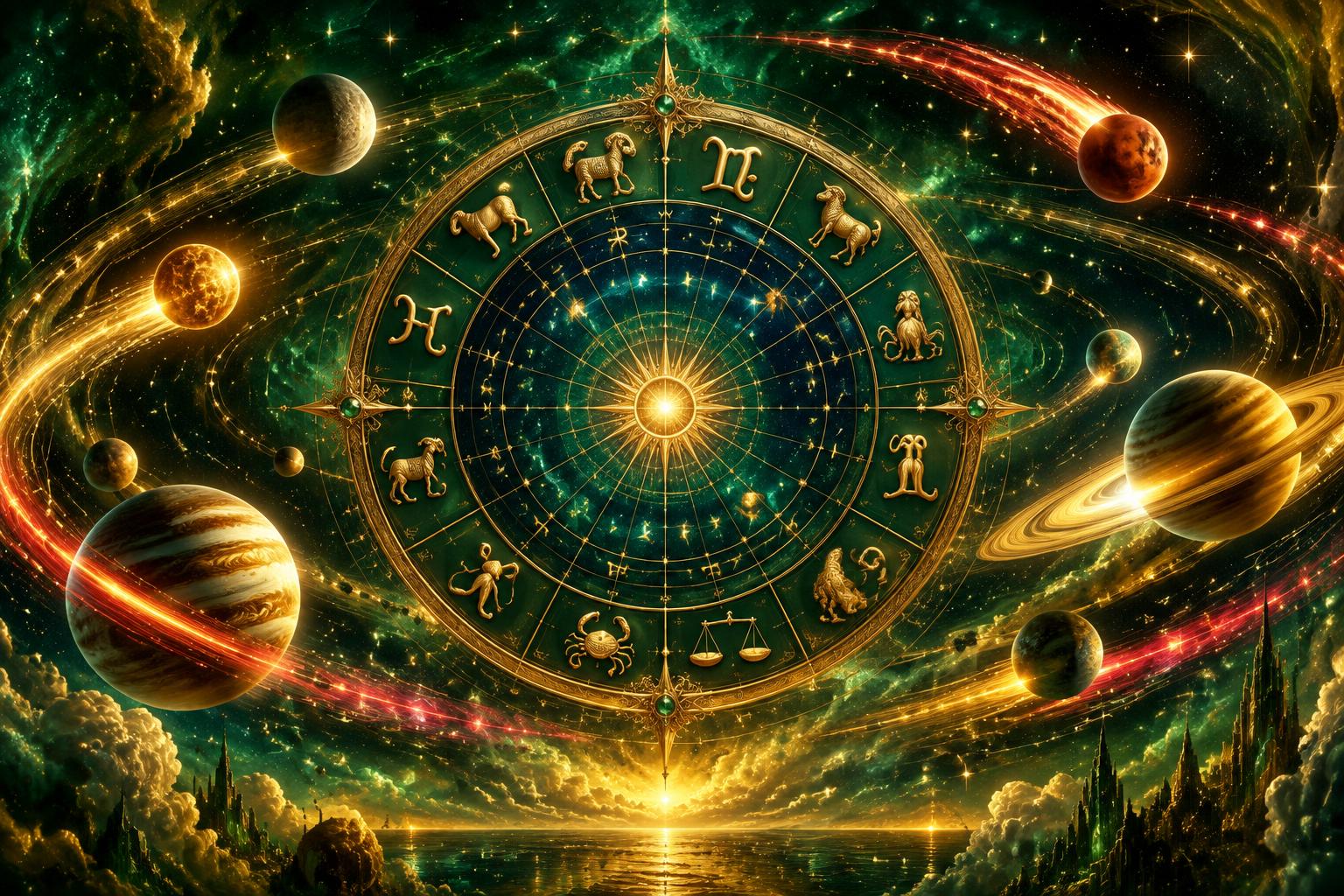
A snapshot and movement
The chart is still. The sky keeps moving.
Here is a beautiful way to picture transits: your birth chart is a still landscape, and the moving planets are trains of light continually crossing it. Each train carries its own theme. Mars brings fire and action, Venus brings closeness and beauty, and Saturn brings weight and wisdom. When a train passes through your landscape, you hear it — the only question is whether you know which train it is.
This is why everyone experiences the same transit differently. Saturn in Pisces may be a period of quiet for one person and a time of heavy responsibility for another — depending on where it falls in their chart.
An example: Saturn crossing the Moon
The best-known transit: Sade Sati
When transiting Saturn crosses the sign of your natal Moon — and the signs immediately before and after it — this is known as Sade Sati, a period of approximately seven and a half years. The Moon is your emotional body. Saturn is the teacher of maturity. When they meet, life asks for honesty: what are you truly carrying, what is merely a habit, and where do you need a boundary?
Sade Sati is not a punishment. It is a time when life grows stronger from within. For many people, this is when they truly grow into adulthood for the first time.
More about Sade Sati
Planetary transit analysis · 179 €
Would you like to know what is moving through your sky right now?
In a personal consultation, I compare your birth chart with the current sky: which transits are active, how long they last, and what would be wise to do during this period. With clarity, warmth, and no fear.
I’d like a planetary transit analysisHow a transit works
Imagine your birth chart as a photograph of the sky that never changes. The planets in the sky, however, move every second. When a moving planet enters a sign, forms an angle with another planet, or crosses a point in your chart, it activates the theme associated with that point — career, relationships, home, health, or your inner world.
- Entering a new sign changes the backdrop for everyone — the collective atmosphere.
- Contact with a personal point in your chart (the Moon, ascendant, or ruling planet) has a more personal and powerful effect.
- Angles between planets (conjunction, opposition, trine) bring two themes together in one story.
How long each transit lasts
A planet’s speed determines how long a period lasts and how deeply it works. Fast-moving planets mark days and weeks; slow-moving planets shape entire chapters of life.
- Moon: around 2.5 days per sign — moods, daily life, emotional waves.
- Sun: one month per sign — the yearly rhythm, bringing one theme into focus.
- Mercury and Venus: around three to four weeks, longer during retrograde motion.
- Mars: around 45 days — action, courage, friction.
- Jupiter: 12 to 13 months — a year of growth and expansion in one area.
- Saturn: around 2.5 years — a long lesson in maturity and structure.
- Rahu and Ketu: around 18 months — karmic shifts, a change of direction.
Retrograde motion: time to look back
Sometimes a planet appears to move backwards in the sky. In astrology, this is called retrograde motion. During this time, the planet’s energy turns inward: themes recur, old projects return for review, and decisions mature. A retrograde planet is not a punishment — it is an invitation to reconsider.
- Mercury retrograde: reviewing conversations, contracts, journeys, and plans.
- Saturn retrograde: an inner reassessment of debts and responsibilities.
- A stationary planet (just before changing direction) has the strongest effect — as though the sky were pausing above you for a moment.
Why slow-moving transits matter most
Saturn, Jupiter, Rahu, and Ketu move slowly. Their transits last months or years, shaping major periods of life. When Saturn crosses your Moon (Sade Sati), it marks years of maturation. When Jupiter enters your seventh house, opportunities for partnership often open up. When Rahu and Ketu shift, the entire direction of life may change.
- Fast-moving transits mark the days — slow-moving ones write the chapters.
- A major event almost always appears in several transits at once, not just one.
- A transit works alongside the dasha, or planetary period: the dasha sets the main theme, while the transit indicates the timing.
Transits are not destiny — they are a weather forecast
A transit does not dictate your destiny. It tells you what the sky is like. You can curse the rain, or take an umbrella and set out. Understanding transits helps you choose the right moment: when to sow, when to rest, when to step forward with courage, and when it is wiser to wait.
- During a favourable transit, build, sign agreements, and connect with others.
- During a challenging transit, strengthen your foundations, learn, and avoid forcing things.
- How you respond to a transit is always a matter of your own free will.
What a transit analysis offers you
In a planetary transit analysis, I compare your birth chart with the actual sky — today and in the months ahead. I look at which planets are touching your key points, how long the period will last, and what would be wise to do during it.
- An overview of current transits in your chart and what they mean.
- A timeline of important shifts in the coming months.
- Practical guidance: where it is time for action and where patience is needed.
Putting it into practice
How to use transits in everyday life
Follow the Moon for your daily rhythm — when your energy is available and when you need rest.
Before major decisions, check Saturn’s and Jupiter’s transits in your chart.
Use retrograde periods for review, not panic.
Always read a transit alongside your dasha — together, they tell the whole story.
Check the astro calendar each month: new moons, full moons, planets entering signs, and eclipses.
Astrological insights are intended for self-discovery and personal reflection. They do not define an unchangeable future or replace medical, psychological, legal or financial advice.
Keep exploring