The sidereal zodiac
Jyotish measures the signs against the fixed stars, using the Lahiri ayanamsa. That is why your Vedic Sun sign is often one sign earlier than in Western astrology.
Jyotish · Vedic astrology
Jyotish is Vedic astrology, India's traditional system for reading the birth chart. It shows not only who you are, but which chapter of life you are in and how to meet the time ahead — clearly, warmly, without fear.
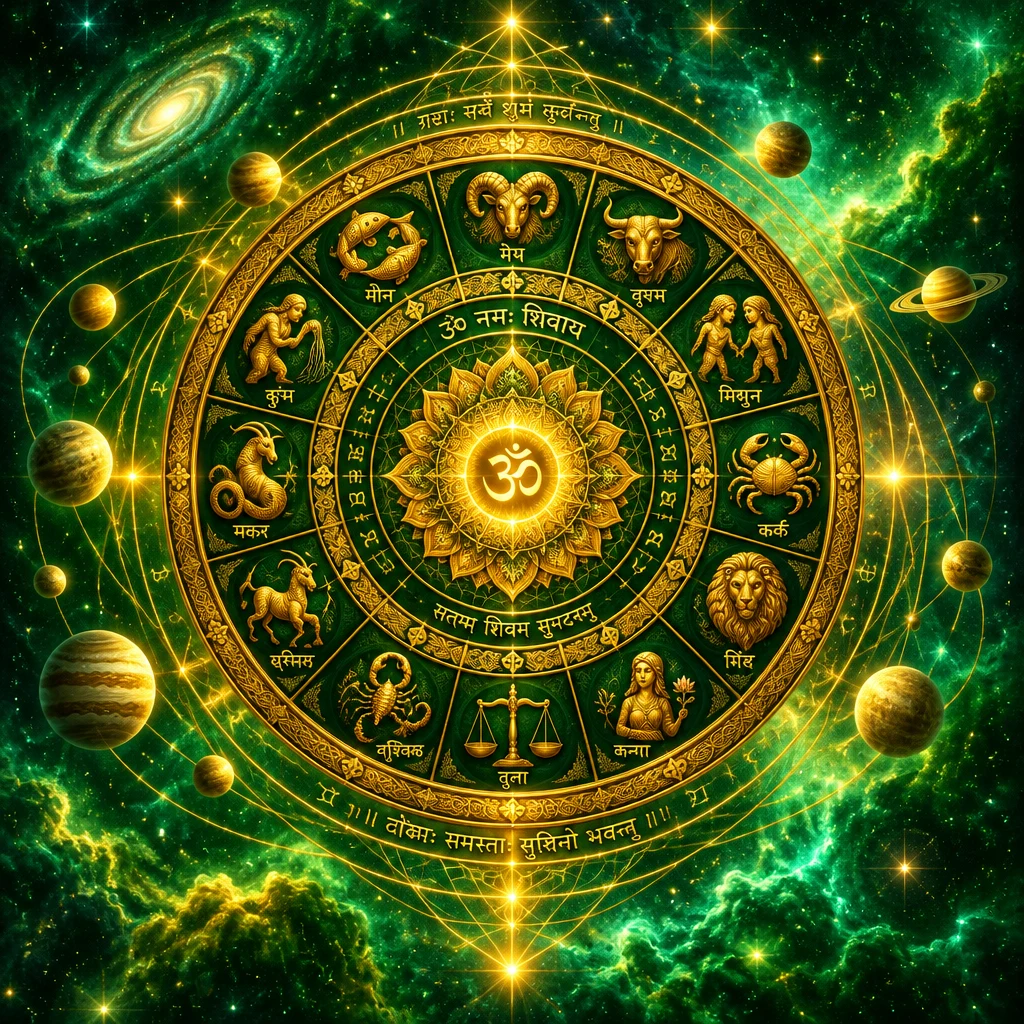
Jyotish measures the signs against the fixed stars, using the Lahiri ayanamsa. That is why your Vedic Sun sign is often one sign earlier than in Western astrology.
The Moon's lunar mansion at birth, your nakshatra, describes your emotional nature, instincts and deeper motivations. Each has its own deity, symbol and shakti.
The 120-year dasha system divides life into planetary chapters. It shows which themes become active when, which is why Jyotish is traditionally used for timing.
Sun, Moon, Mars, Mercury, Jupiter, Venus, Saturn and the lunar nodes Rahu and Ketu. Together they describe desires, lessons and karmic direction.
Saturn's seven-and-a-half-year passage over the natal Moon is one of the best-known Jyotish transits: a period of maturing, restructuring and responsibility.
Jyotish is Vedic astrology, the traditional astrological system of India. The word means 'science of light'. It reads the birth chart against the actual stars (sidereal zodiac) and times life through planetary periods called dashas.
Western astrology uses the tropical zodiac tied to the seasons. Jyotish uses the sidereal zodiac tied to the constellations, about 24 degrees apart, and puts the Moon and its 27 nakshatras at the centre.
Yes. Jyotish, Jyotisha, Djotish and Vedic astrology are different spellings and names for the same tradition.
No. It describes patterns, potentials and the quality of time. Awareness of them helps you respond more consciously.